
FS Vector Stablecoin Adoption Index: Are Institutions Ready for the Consumer Stablecoin Breakthrough?
Stablecoins have quickly moved from a niche digital asset to one of the most discussed innovations in financial services.
As regulators develop clearer frameworks and financial institutions explore new use cases, the conversation is shifting from whether stablecoins will play a role in the future of finance to how quickly consumers will adopt them.
Yet many questions remain. Do consumers understand what stablecoins are? Which institutions do they trust to provide them? Are they interested in learning more? And what will ultimately drive (or prevent) mainstream adoption?
To answer these questions, FS Vector surveyed 482 U.S. consumers to better understand awareness, trust, interest, and adoption intent related to stablecoins.
Importantly, mainstream adoption does not necessarily mean consumers will actively choose to use stablecoins, or even know they are using them. In many cases, stablecoins will power financial services behind the scenes, enabling faster payments and lower costs while remaining largely invisible to the end user. Even so, consumers' perceptions of the technology and the institutions delivering these experiences will continue to shape adoption.
The findings suggest that consumers may be further ahead than many financial institutions realize. Awareness is higher than expected, interest is growing, and consumers are looking for trusted providers to help them navigate the emerging stablecoin ecosystem.
Here's what we found.
Finding #1: Consumers Are More Stablecoin-Aware Than Institutions Realize
One of the most surprising findings from the FS Vector Stablecoin Adoption Index is that consumer awareness of stablecoins is significantly higher than many industry observers may expect.
When asked to identify what a stablecoin is, 42.3% of respondents identified the correct definition. For an emerging financial technology that has received only a fraction of the consumer attention dedicated to cryptocurrencies such as Bitcoin and Ethereum, this level of awareness is notable.

This finding suggests that the market may be more prepared for stablecoin adoption than many financial institutions assume. While awareness is far from universal, stablecoins have already crossed an important threshold: they are no longer entirely unfamiliar to mainstream consumers.
For financial institutions, this creates an opportunity. Rather than beginning with basic awareness campaigns, many organizations can focus on education, practical applications, and consumer benefits. The conversation is evolving from "What is a stablecoin?" to "How can I use one?"
Finding #2: Consumers Want Major Financial Institutions and Fintechs to Lead the Conversation
As stablecoins move toward mainstream adoption, a central question is emerging: Who will consumers trust to provide them?
Major financial institutions hold the clearest advantage. More than one-third of respondents (34%) said they would most trust a major financial institution, such as a national bank, to provide stablecoin-related services. Fintech companies ranked second at 21%, ahead of cryptocurrency exchanges (13.1%), regional banks (8.9%), and technology companies such as Apple or Google (9.1%).

Trust, however, is only part of the story.
Consumers are also looking for guidance. Nearly one-third of respondents (33.6%) said they would be interested in discussing digital assets or stablecoins with their bank, financial advisor, or fintech provider but have not yet had the opportunity to do so.
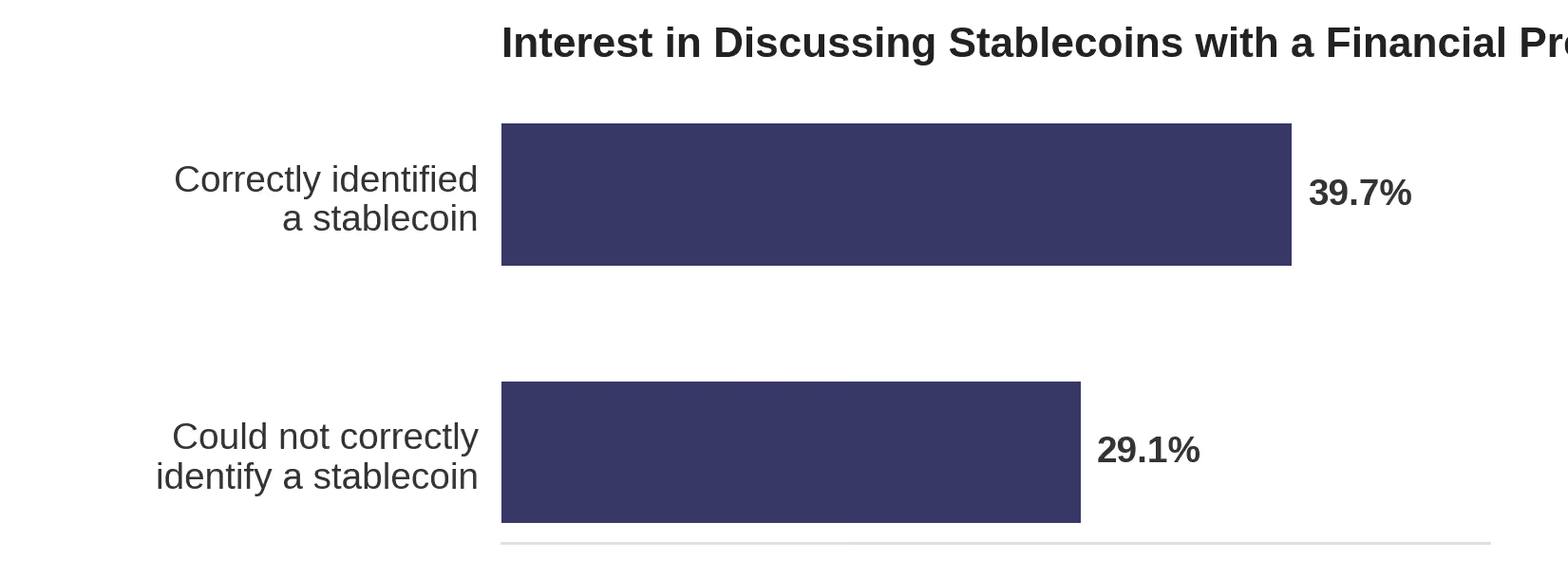
Interest in these conversations is not evenly distributed. In fact, consumers who already understand stablecoins are significantly more likely to seek additional information from a financial provider.
Among respondents who correctly identified a stablecoin, 39.7% said they would be interested in discussing the technology with a financial provider, compared to 29.1% of those who could not correctly define a stablecoin.
Trust may favor major financial institutions in these conversations today, but consumers remain open to new financial relationships. Nearly 75% of respondents (76.3%) said they were either very open or somewhat open to adding another financial institution, fintech app, payment app, investing app, or crypto platform to their financial lives.
Taken together, these findings suggest that major financial institutions have a trust advantage, but the market is far from settled. Consumers are actively seeking information, remain open to new providers, and appear willing to engage with organizations that can clearly communicate the value of stablecoins.
The door is open. The question is which institutions will move first.
Finding #3: Adoption Is Ready to Accelerate, If Institutions Make It Easy
While awareness and interest are important indicators, actual adoption is ultimately what matters.
The research suggests consumers may be ready to take the next step, provided stablecoins are offered through channels they already trust and use.
When asked whether they would be willing to try a stablecoin if it were available within their bank's mobile application, 58.5% of respondents indicated they would be likely to do so.
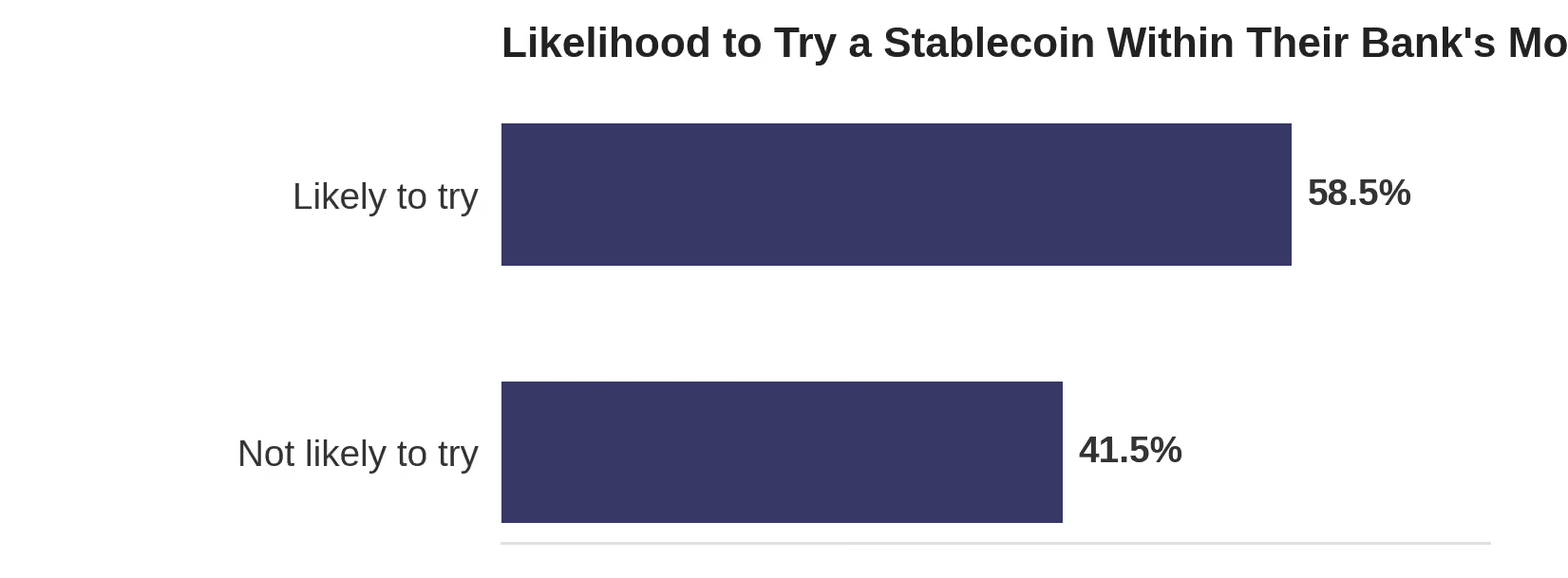
This may be the most consequential finding in the study.
For years, stablecoin adoption has largely occurred through cryptocurrency exchanges, digital wallets, and specialized fintech platforms. Yet consumers appear increasingly open to engaging with stablecoins when they are integrated into familiar financial experiences.
The implication is clear: the next wave of stablecoin adoption may not come from creating new consumer experiences. It may come from embedding stablecoins into existing banking experiences or familiar fintech applications.
For financial institutions and fintech providers alike, the opportunity may be less about introducing consumers to stablecoins and more about making them accessible, intuitive, and useful within the platforms consumers already trust.
Finding #4: Consumers Are Looking for Practical Benefits, Not Crypto Hype
Much of the public conversation around digital assets has focused on innovation, decentralization, and disruption. The average consumer, however, appears to have a different perspective.
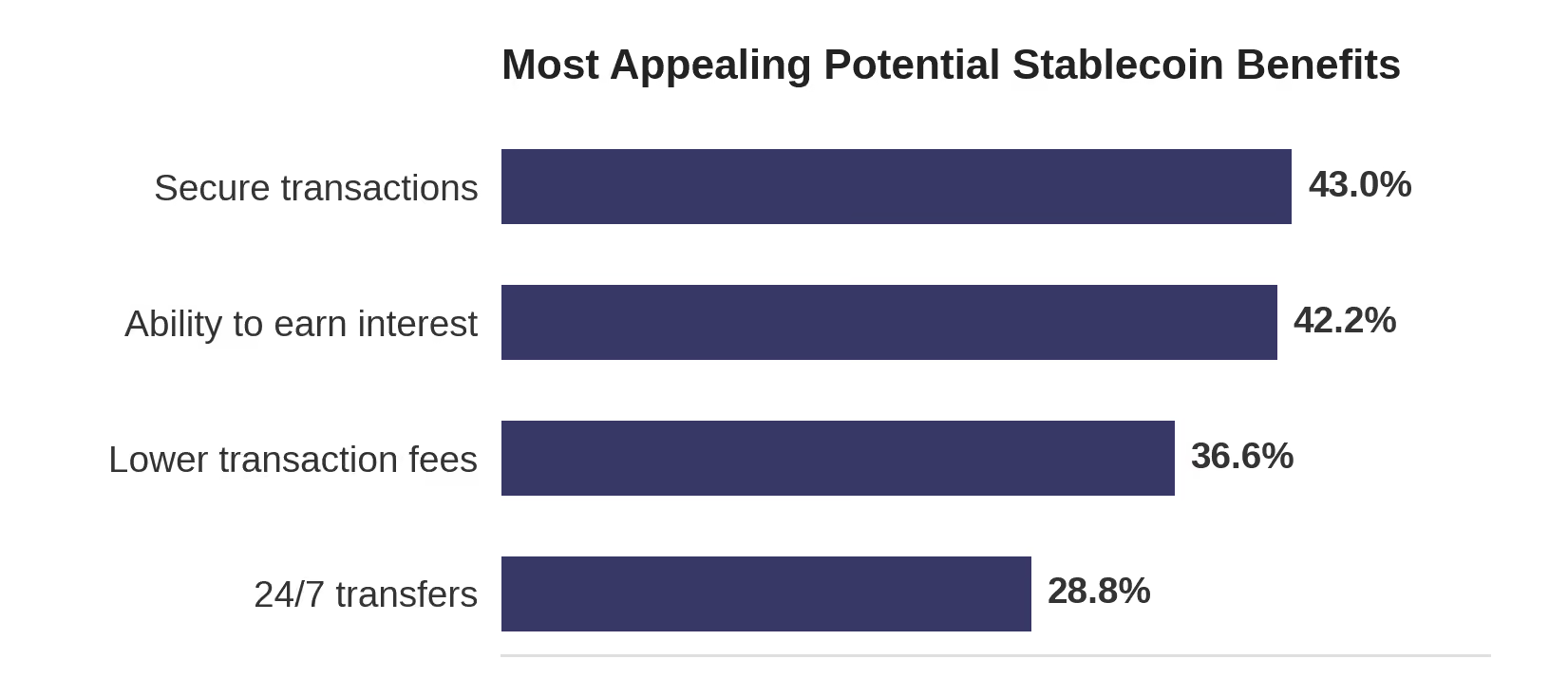
When asked which potential stablecoin benefits were most appealing, respondents prioritized practical financial advantages. Secure transactions (43.0%) and the ability to earn interest (42.2%) ranked highest, followed by lower transaction fees (36.6%) and 24/7 transfers (28.8%).
Similarly, consumers identified everyday financial activities as the use cases most likely to drive adoption. Online purchases (45.9%), paying bills (41.1%), saving or earning interest (40.2%), and sending money to family or friends (34.8%) ranked among the top potential applications.
At the same time, consumers remain cautious. The risk of losing money (37.6%) emerged as the top concern, followed by cybersecurity and hacking risks (30.3%) and concerns about regulation (27.2%).
Taken together, these findings suggest that mainstream adoption will depend less on promoting the technology itself and more on demonstrating real-world value. Consumers appear willing to consider stablecoins when they solve familiar financial problems, reduce costs, improve convenience, or create new opportunities to grow savings.
For providers, the challenge is clear: highlight the benefits consumers care about while addressing the security, regulatory, and trust concerns that continue to shape adoption decisions.
The Stablecoin Opportunity May Be Closer Than Many Think
The findings from the FS Vector Stablecoin Adoption Index challenge several assumptions about consumer readiness for stablecoins.
Consumers are more aware of stablecoins than many industry observers expected. They are interested in learning more, open to engaging with financial providers, and willing to consider using stablecoins when they are delivered through trusted and familiar experiences.
At the same time, consumers are looking beyond the technology itself. They are most interested in practical benefits such as secure transactions, lower costs, and opportunities to earn interest, while remaining mindful of risks related to security, regulation, and potential financial loss.
Yet willingness to try stablecoins should not be confused with widespread adoption. Among respondents who could accurately define a stablecoin, just 8.4% reported having used one. In other words, even among consumers who understand stablecoins, the vast majority have not yet used them.
For financial institutions and fintechs alike, that gap between awareness and adoption represents a significant opportunity. The data suggests that the challenge is no longer introducing consumers to stablecoins, it is helping them take the next step. The organizations that successfully bridge that gap will be the ones most likely to shape the future of stablecoin adoption.